Your Kitchen Window Is a Photo Studio: Shooting Sellable Product Pics on a Phone
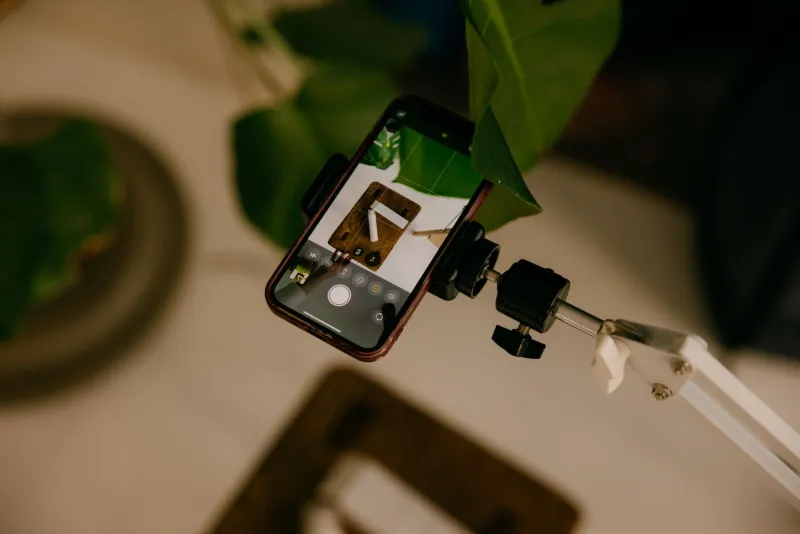
Walk the aisles of any craft fair between Bangor and Birmingham and you'll spot it: a vendor with a table full of gorgeous, handmade goods and a phone full of photos that make those same goods look like a yard sale. It's the most common gap between a good product and a good listing — and the good news is it's almost entirely fixable for zero dollars.
Here's the honest truth from watching thousands of listings move through East Marketplace: buyers decide in about two seconds whether to tap on your product. Your photo is doing all the work. A $40 jar of small-batch bread-and-butters shot in a dim kitchen reads as a $3 jar of grocery store pickles. Same product. Different light.
Start With the Window, Not the Gear
Every phone made in the last five years has a camera capable of professional-looking product shots. What it doesn't have is professional lighting — because you haven't given it any yet.
Find the largest window in your house. North-facing windows are the dream because the light stays soft and consistent all day, but honestly, any window works if you time it right. Shoot in the mid-morning or late afternoon when the sun isn't blasting directly through the glass. Direct sun creates hard shadows and blown-out highlights — the two things that scream "amateur" in a listing thumbnail.
Set up a small table or chair near the window, with the light hitting your product from the side at roughly a 45-degree angle. Side light shows texture, which matters enormously whether you're photographing knitted hats or glazed pottery. If the shadow side looks too dark, bounce light back with a piece of white foam board, a poster board from the dollar store, or — no joke — a car sunshade. That's your entire lighting kit.
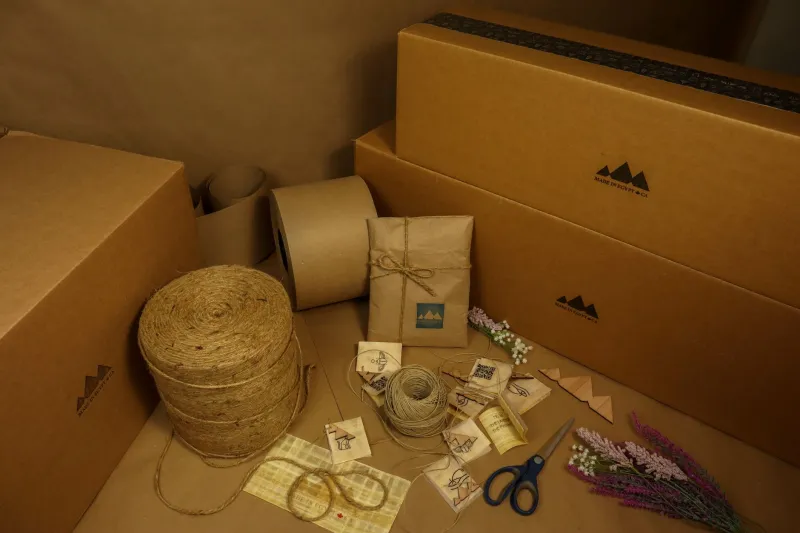
The Cardboard Box Backdrop Trick
Backdrops are where budget sellers overthink things. You need exactly two setups:
The seamless sweep. Take a large sheet of white or neutral poster board and tape it to the wall so it curves down onto your table. That curve is the whole trick — it removes the visible horizon line and makes your product look like it floats in clean space. This is what studio photographers call a sweep, and yours cost $1.29.
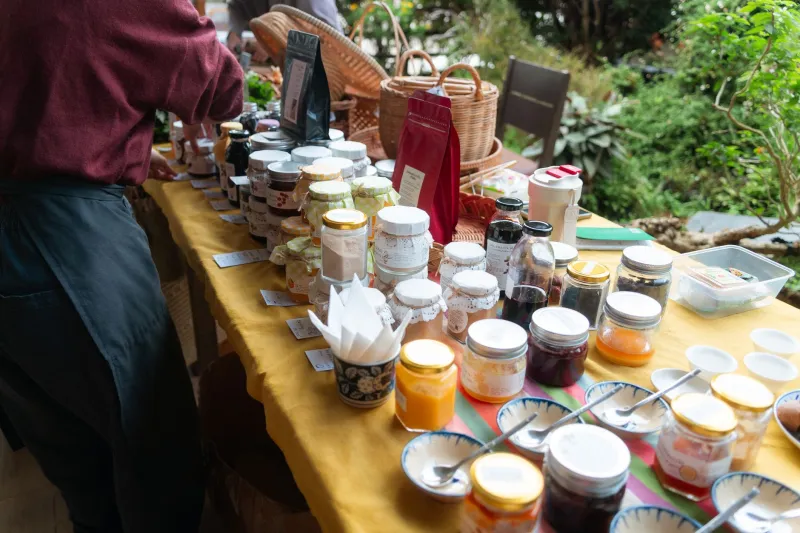
The story backdrop. For regional goods especially, context sells. A cutting board on a weathered barn board. Jam jars on a linen tablecloth with a few berries scattered nearby. A porch sign leaning against actual porch wood. Keep it simple — two or three props max — and make sure anything in the frame is something you'd find near the product in real life.
One warning: skip the busy tablecloth and the fake flowers. Every prop competes with your product, and your product should win.
Food Is Different From Handmade Goods
These two categories want different treatment, and lumping them together is where a lot of sellers go sideways.
Food wants to look fresh. Shoot it the same day you make it, ideally within hours. Wipe every jar rim and smudge — the camera sees everything. For anything with moisture (pickles, sauces, produce), a light spritz of water makes it look just-picked. Get close. Fill the frame with the food. The texture of your product IS the selling point, so let the camera get right up on it. Use your phone's tap-to-focus on the most appetizing detail and pull the exposure down slightly by dragging the sun icon — slightly underexposed food looks rich; overexposed food looks flat.
Handmade goods want to look precise. For ceramics, woodworking, textiles, and signs, buyers are scrutinizing craftsmanship. Shoot straight-on at eye level to show the piece as it would hang or sit in a home. Include at least one shot with something familiar in frame — a hand, a doorway, a coffee mug — so buyers can gauge scale. Nothing kills a handmade sale faster than a buyer guessing whether that sign is 12 inches or 4 feet.
The Three Angles That Convert
If you only remember one section of this article, make it this one. Across basically every category we see, listings with these three shots outperform single-photo listings:
1. The hero shot. Straight-on or slightly angled, clean background, product filling most of the frame. This is your listing thumbnail. Make it boring and beautiful.
2. The detail shot. Get within a few inches. The stitching on the bag. The grain in the walnut. The seal on the jar lid. Close-ups answer the quality question before the buyer has to ask it.
3. The in-context shot. Your product in its natural habitat — on a kitchen counter, on a mantel, on a porch. This is where regional goods shine, because you're not just selling an object, you're selling a piece of somewhere.
Three angles, three or four photos total. You don't need twelve; you need the right three.
Before You Upload
Wipe your lens with a shirt — phone lenses collect pocket lint and it shows. Turn off your flash permanently for product shots. Clean your phone's camera settings back to default (no filters, no beauty mode). And shoot more than you think you need; cropping later is free, reshooting tomorrow is not.
Your product already earned its price at the market. These photos just make sure the listing agrees.