You've Been Running Focus Groups Every Saturday and Didn't Know It
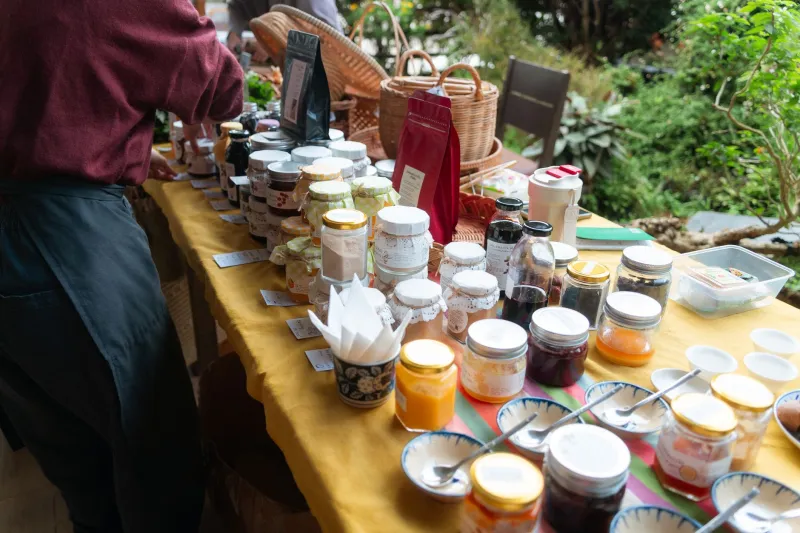
If you sell at a farmers market, you already have something most e-commerce sellers pay good money for: direct, unfiltered access to your buyers. Every Saturday, you get to watch real people react to your products in real time. Most vendors treat that as just another sales day. The smart ones treat it as a research lab.
Here's how to start collecting the data you're already generating — and how to translate it into online listings that sell while you sleep.
Start With the Sample Tray
Your sampling table is the single best conversion test you have. Watch which flavors disappear first and which ones get the polite "mm-hm" before the customer drifts away. That peach-habanero jam might be your personal favorite, but if the blueberry keeps emptying out, that tells you something.
Keep a simple tally for a few weekends. Nothing fancy — a note on your phone works. Track two things: what people try and what they buy. When those two lists match up, you've found your hero product. When they don't, you've found your conversation piece — and conversation pieces can still work online, but they shouldn't be your listing photo.
Write Down the Questions. All of Them.
In-person buyers ask the questions your product page needs to answer. "Is this shelf-stable?" "How spicy is it, really?" "Do you have anything without added sugar?" "How long does this keep?"
Every question you answer twice in one morning is a bullet point missing from your listing. Over a month, you'll have a complete FAQ written by your actual customers — not guessed at by you.
This matters more online than in person. At the market, a hesitant buyer can ask you. Online, a hesitant buyer just closes the tab. Your description is your only chance to answer.
The Put-Down Is Data Too
Here's the uncomfortable part: pay attention to what people pick up and set back down. If customers keep picking up your $14 jar of wildflower honey, turning the label, and putting it back, something is stopping them. Usually it's price — or price without justification.
That's not a reason to panic and slash prices. It's a prompt to add context. At the market, you can say "that's from a single apiary in the ridge, raw and unfiltered." Online, that same sentence goes in your description, and suddenly the price makes sense. Buyers aren't cheap; they're unconvinced. Your job is to convince them in writing.
Price for the Shelf, Not the Table
Market pricing and online pricing aren't identical, and pretending they are is a common first-year mistake. Online, you're adding shipping, packaging, and platform fees that your Saturday customers never see.
A useful rule of thumb: your online price should be your market price plus your true shipping cost, shown clearly — not buried, not subsidized into a loss. Buyers of regional goods largely accept paying for shipping. What they won't accept is feeling tricked by a low product price and a surprise $12 shipping charge at checkout.
Let Buyer Behavior Pick Your Photos
Watch what customers physically do at your booth. They pick up the jar. They turn it around. They smell it. They look at the texture.
Your photos should replicate that sequence:
- The pick-up shot — the product front and center, clean background, natural light.
- The turn-around — your label, your story, your farm name. This is where regional sellers win.
- The texture shot — the jam on a spoon, the crumb of the bread, the grain of the wood.
Skip the stylized flat-lay with the artisan linen and the eucalyptus sprig if that's not how the product actually shows up. Online buyers have been burned by too-perfect photos. The ones who buy regional goods specifically want to see the real thing.
One Weekend of Notes Beats a Month of Guessing
You don't need analytics software or a customer survey. You need a notes app, a few honest weekends of observation, and the discipline to let buyer behavior — not your personal preferences — drive your listings.
The vendors who grow from market table to steady online sales aren't usually the ones with the best products. They're the ones who listened closest. You've been doing the research all along. Start writing it down.