Your Booth Voice Works Online Too: Moving the Farmers Market Stand to the Web
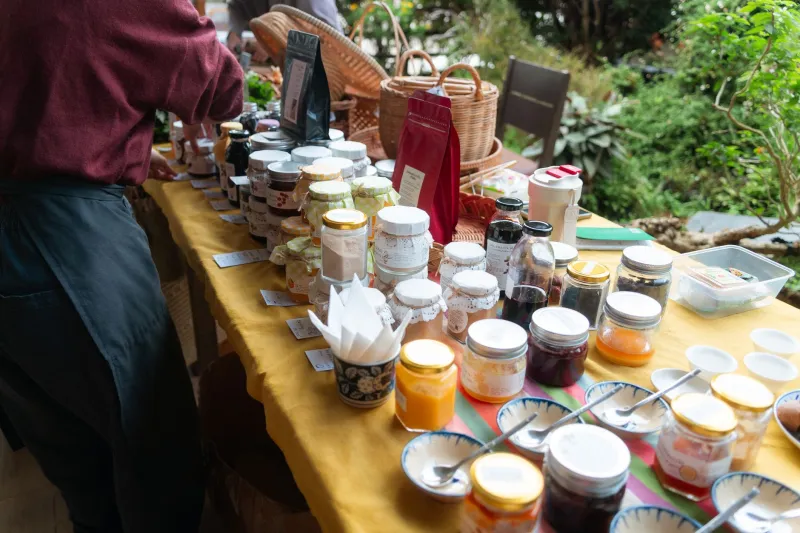
If you've spent a few seasons behind a folding table at your local farmers market, you already know how to sell. You sample the salsa, you tell the story about your grandmother's recipe, you remember that the woman from two towns over likes hers extra hot. The problem isn't your sales ability — it's that a webpage can't hand out toothpicks.
Good news: it doesn't need to. Everything that works at the booth has an online equivalent. You just have to build it on purpose.
Price It Like You're Not Standing There
At market, pricing is a conversation. Someone winces at $9 for a candle and you explain the soy wax, the hand-poured process, the forty minutes it took. Online, nobody winces at you — they just click away.
That means your price has to defend itself before anyone asks. A few adjustments:
- Stop thinking in market math. At the stand, you price to cover the table fee and a Saturday morning. Online, you're covering shipping materials, payment processing, and the fact that a customer in Ohio can't smell the soap. Build those costs in from the start instead of eating them.
- Tier your offerings. Vendors who do well online usually list a small, medium, and large version of their hero product. The $6 sample-size jar gets people in the door; the $28 gift set is where margin lives.
- Bundle for shipping, not for the booth. A three-jar pack that fits a flat-rate box is a better online listing than a single jar that costs almost as much to ship as it does to buy.
Photograph the Product Like the Customer Can't Pick It Up
At the booth, texture sells. People squeeze the bread, run a thumb over the glaze, hold the quilt up to the light. Your photos have to do that work.
The mistake most first-time online sellers make is over-styling. You don't need a photography studio — you need daylight and a boring background. Shoot near a window in the morning, put the item on a plain wood board or white poster board, and take more photos than you think you need.
Then add the shots market shoppers get for free:
- A scale reference — the honey jar next to a coffee mug, the throw blanket draped over a chair
- A close-up of the thing you'd point at — the hand-stitching, the wood grain, the pepper flakes suspended in the vinegar
- One in-use photo, even if it's just your own kitchen counter with the jam on toast
If your photos look like they came from your actual life rather than a catalog, that's a feature. Buyers of regional goods are shopping for realness.
Write Descriptions in Your Own Voice — Seriously, Record Yourself
Here's the exercise: next market day, set your phone in your apron pocket. Record yourself talking to customers. Then listen back.
You'll hear phrases like "that's the batch with the extra garlic," or "my wife talked me into making this one," or "it's sweet until it isn't." Those sentences are your product descriptions. Not marketing-speak. Not "artisanal small-batch excellence." Your actual words.
A description structure that works:
- What it is, plainly. "Small-batch salsa verde, made with tomatillos from two farms down the road."
- The story, in one or two sentences. The reason you make it, briefly.
- How to use it. Customers at the booth always ask "what do I do with this?" Answer it in the listing.
- The practical stuff. Size, weight, shelf life, whether it ships in summer (more on that below).
Cash-and-Carry Is Now a Shipping Question
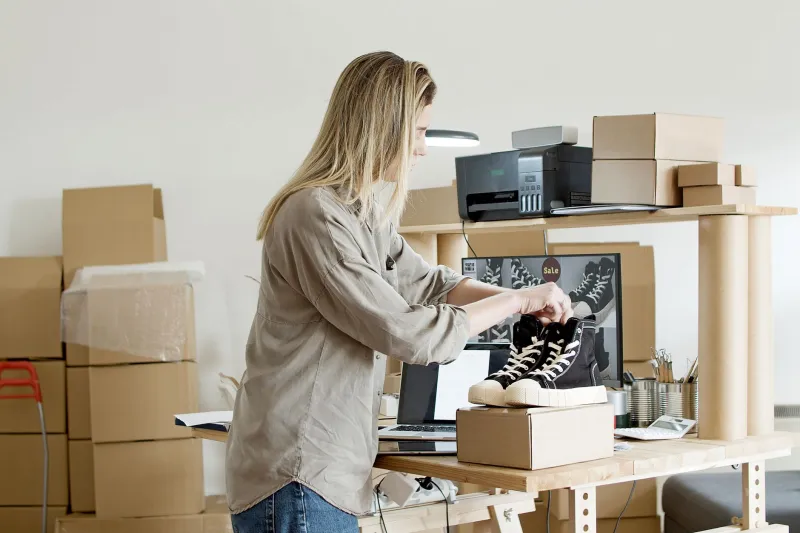
The biggest operational shift going online isn't the tech — it's that every sale now ends with a box. A few things to sort out before your first listing goes live:
- Know your shipping zones. A jar of honey crossing three states needs more padding than one crossing town. Weigh and measure your packed products before you set a shipping price, not after.
- Heat and cold are real. Chocolate, candles, and anything with wax or fat will suffer in a July truck crossing the Southwest. Either restrict summer shipping, add an ice pack option, or note it clearly in the listing.
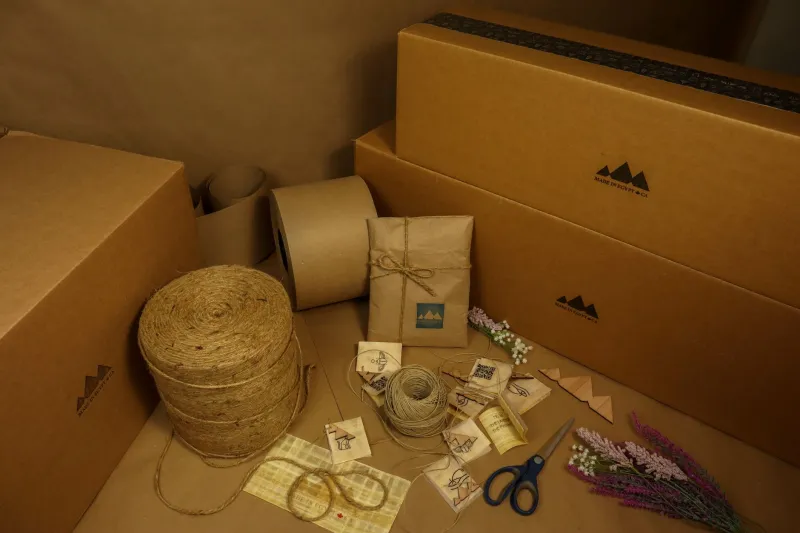
- Build the unboxing moment. At the booth you hand something over with a smile. Online, your version is a handwritten note or a sticker inside the box. It costs you a dollar and it's the reason someone comes back.
The Charm Translates — If You Let It
The vendors who struggle online are usually the ones who think they need to become a different business to go digital. You don't. The person who talks to strangers about pepper jelly on Saturday mornings is exactly the person whose product pages feel alive.
The booth taught you how to explain what you make and why it matters. The browser just gives you a bigger Saturday.