The Pricing Page Is Your Storefront: Writing Product Descriptions That Answer Questions Before Buyers Ask Them
Here's an opinion I'll defend: most product listings fail not because the product is bad, but because the description makes the buyer do all the work.
Buyers arrive at your listing with questions already forming in their head. Size, weight, timeline, care, shipping, returns. Every question you don't answer is a reason to click away — or worse, to message you and wait two days for a reply that may never come. The best listings close the loop before it opens.
Let me show you what I mean with a real pattern we see constantly on regional marketplaces.
The Listing That Wasn't Selling
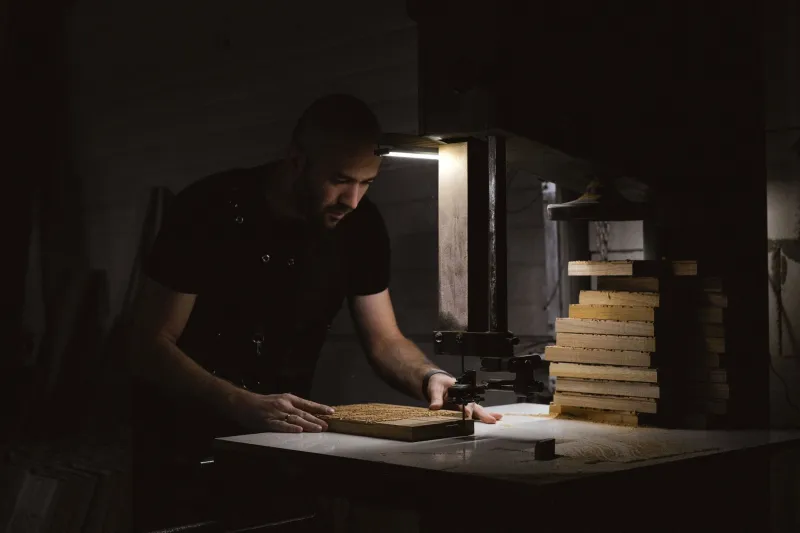
A woodworker in western North Carolina — let's call him Dale — makes cutting boards from reclaimed walnut and oak. His original description read, and I'm paraphrasing only slightly:
Beautiful handcrafted cutting board. Made with love from quality hardwoods. Perfect gift for any occasion. Each piece is unique!
Dale's work is genuinely good. His photos were fine. His price was fair. But that description answers almost nothing. What are the dimensions? Is it food safe? How do you care for it? How long until it ships? 'Made with love' is not a spec sheet.
Dale was getting views and no sales, plus a steady drip of messages asking the same five questions. Every one of those messages was a sale that stalled.
The Rewrite
Here's the structure we moved him to. Not fancy — just organized around what buyers actually want to know:
Open with the object, not the feeling.
Reclaimed walnut and oak end-grain cutting board, 16" × 12" × 1.5". Each board is finished with food-safe mineral oil and beeswax from a small apiary two counties over.
In two sentences, the buyer knows the material, the size, the finish, and gets a bonus provenance detail that no big-box listing can match. Regional sellers: this is your unfair advantage. Use it.
Then answer the questions in the order buyers ask them:
- Care: Hand wash, dry standing up. Re-oil monthly with any food-safe mineral oil. I include a care card with every order.
- Timeline: Ships in 3–5 business days from my shop in Boone, NC. Free local pickup available.
- Gift-ready: Boards ship wrapped in kraft paper with a blank gift tag — no pricing info included.
- Returns: If your board arrives damaged, send me a photo within 48 hours and I'll make it right.
That's it. No poetry. Dale's rewrite took twenty minutes and his conversion rate on that listing roughly doubled within a month. Same product, same photos, same price. The description just stopped making people ask.
The Weak vs. Strong Pattern
Once you've seen it, you'll spot it everywhere:
| Weak listing says | Strong listing says |
|---|---|
| "High quality materials" | "Full-grain leather from a tannery in Red Wing, MN" |
| "Ships fast!" | "Ships within 2 business days via USPS Priority" |
| "Great gift!" | "Arrives gift-wrapped; add a note at checkout" |
| "One of a kind!" | "Grain pattern varies; yours will look like photo 4" |
| "Message me for details" | The details, listed out |
The left column is a shrug. The right column is a handshake.
Three Questions to Ask Your Own Listings
Pull up your least-performing product right now and run it through this filter:
- Could a stranger buy this without messaging me? If not, what's missing?
- Am I describing the product or describing my feelings about the product? Feelings belong in one line at the end, not the top.
- Is there one regional detail I'm leaving out? The mill, the farm, the town, the family recipe. This is the stuff no drop-shipper can copy.
The Bottom Line
On a marketplace, your listing page is your storefront. There's no friendly face at the booth, no chance to answer 'so what's the story with this wood?' in person. The description has to do all of that — and unlike a farmers market Saturday, it does it at 2 a.m. while you're asleep.
Dale's boards now sell with barely any messages. He spends the saved time making more boards. That's the whole game: write it once, sell it forever.