That Box Is Your Booth: Making a Shipped Order Feel Like a Market Haul
The Moment You Lose the Customer
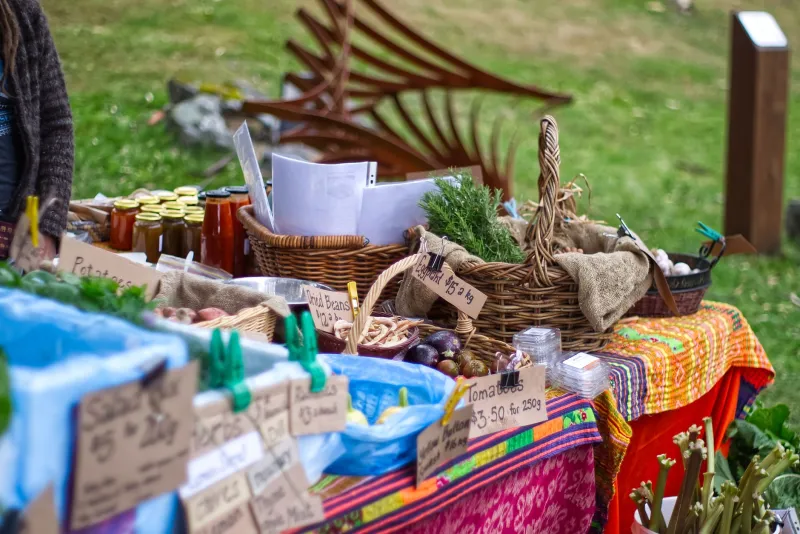
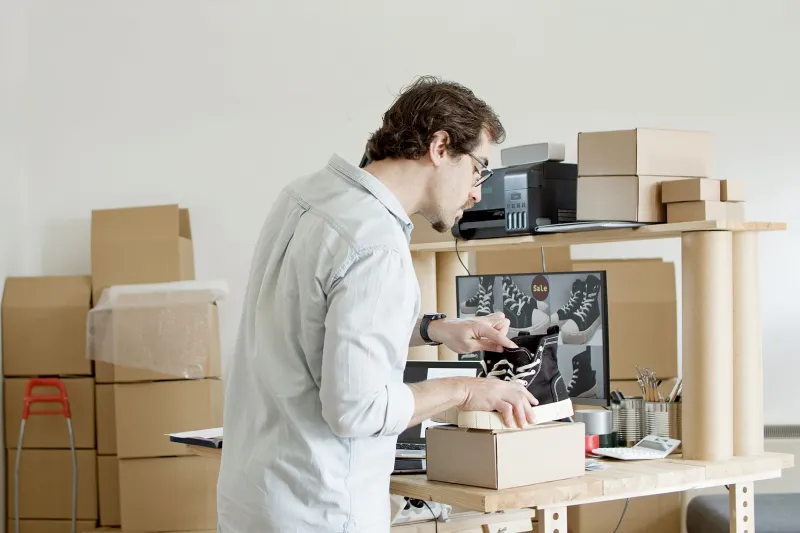
At the farmers market, you've got three feet of table, a canopy, a handshake, and a jar of honey the buyer can smell through the lid. Online, you've got a corrugated box that sat on a mail truck next to somebody's Amazon order. That box is the only booth you've got — and most sellers treat it like trash.
The math on repeat purchases is brutal and simple: a customer who feels something when they open your package remembers you. A customer who tears into plain cardboard, finds a jar rattling in wood shavings you got for free, and moves on with their day — that's a one-and-done sale. The good news is you don't need a branding agency to fix this. You need about forty minutes and a printer.
What's Actually in the Box (Besides the Product)
Think about what happens at your market stand. The buyer gets a story, a sample, a sticker on the jar, and a reason to come back next Saturday. Your shipment can carry the same load:
- The story insert. A single card, 4x6 or smaller, that says who you are, where the goods come from, and why it matters.
- The physical touch. A sticker, a small sample, a handwritten initial. Anything the buyer didn't pay for.
- The invitation back. A coupon code, a QR code to your shop, or a "find us at the Saturday market" line.
- The care factor. Tissue paper, crinkle fill, even a rubber stamp on the box exterior — proof a human packed this.
Skip any one of these and the package still works. Skip all of them and you're a commodity.
The Real Cost Breakdown (Under 50 Units/Month)
Here's where sellers get scared, so let's run actual numbers at low volume, where everybody starts:
Story cards (4x6, printed at home or a local shop): At 50 cards, expect $8–15 from a print shop, or roughly $6 in ink and cardstock doing it yourself. Call it $0.20 per order.
Custom stickers (your logo, 1.5-inch round): Roll of 100 runs $10–18 online. At one per order, that's $0.12–0.18.
Tissue paper or crinkle fill: A 100-sheet pack of branded-look tissue is about $12. Two sheets per order means $0.24 per order. (Unbranded kraft tissue is cheaper and still looks intentional.)
Rubber stamp + ink pad for the box exterior: One-time cost of $15–25, then pennies per use. Amortized over a year of 40 orders a month, you're at basically zero.
Coupon card or QR insert: Same cardstock as the story card. $0.05.
Total: roughly $0.70–0.90 per shipment. On a $24 order, that's under 4% — and it's the cheapest advertising you will ever buy, because the buyer is holding it in their hands at peak attention.
Write the Insert Like You Talk
The story card is where most sellers either go full corporate or skip it entirely. Don't do either. You're not writing packaging copy for a national brand; you're doing what you do at the market stand when somebody picks up the blueberry jam and asks, "So where do the berries come from?"
A formula that works:
- One line on the origin. "Every batch is cooked in our kitchen in Asheville with berries from a farm eleven miles up the road."
- One line on the person. "I'm Dana. I started making this because..." — keep it short, one sentence, no memoir.
- One line of use. A serving idea, a storage tip, something that makes the product feel alive in their kitchen.
- One line back to you. A QR code, a handle, or "we're at the Durham Farmers Market most Saturdays."
Handwriting anything — even just "Thanks, Dana" in pen — punches way above its weight. Buyers screenshot this stuff. It ends up in unboxing posts. That's word-of-mouth you didn't pay for.
The Unboxing Is a Shareable Moment
Here's the part sellers underrate: people film themselves opening packages. If your box opens to tissue paper, a sticker sealing it shut, and a card that says "You just got the good stuff from eastern Tennessee," a certain percentage of buyers will photograph it and post it. That's free reach to an audience that already trusts the person posting.
You don't need to engineer virality. You just need the package to look like someone cared. Plain boxes don't get photographed. Boxes with a wax-sealed tissue bundle and a stamped logo do.
A Few Cheap Tricks That Read Expensive
- Stamp the outside of the shipping box. Looks artisanal, costs almost nothing after the initial stamp.
- Use kraft paper as void fill instead of plastic air pillows. It's regional-looking, recyclable, and free if you save packing paper from your own deliveries.
- Put the sticker on the product itself, not just the box. It survives the unboxing.
- Include a second, smaller sample if your margins allow — a tea sachet, a soap sliver. A $0.30 sample drives more repeat orders than any email campaign at this scale.
- Print your market schedule on the insert. It converts online buyers into in-person customers, and in-person customers into regulars.
Start With What You Have
Don't wait until you can afford custom-printed everything. Tonight, handwrite five thank-you notes, stick them in your next five shipments, and see what happens. Watch your repeat rate over the next sixty days. I'd bet the boxes with the notes come back faster — and when they do, you'll know the packaging wasn't overhead. It was the souvenir.
Because that's what you're really shipping: proof that the thing at your market table is the same thing that showed up at their door.