No Shipping, No Problem: The Quiet Math Behind Pickup-Only Selling
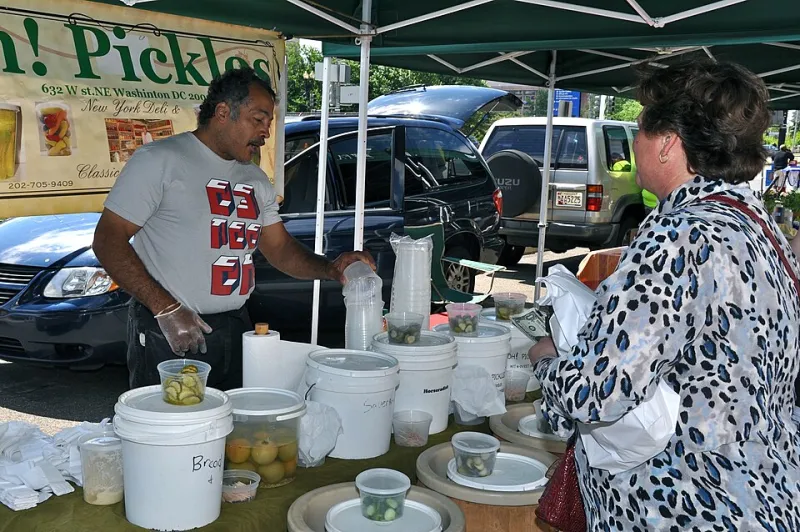
Photo: USDAgov, Public domain, via Wikimedia Commons
There's a moment in every new seller's life when someone from three states away sends the message: Do you ship?
It feels like free money. A buyer found you, loved your product, and wants to pay you for it. All you have to do is say yes.
Plenty of sellers do say yes, and plenty of them do fine. But a stubborn and growing group on East Marketplace has built thriving shops while saying no — listing everything as local pickup only, meeting buyers at farmers markets, church parking lots, or their own front porches, and never once standing in line at the post office.
It sounds backwards. It's actually a strategy. Here's how it works.
The Hidden Invoice You Never See
Ask a shipping seller about their real margins and you'll get a number. Ask them to account for every box, every roll of tape, every padded mailer, every insurance claim on a jar of pickles that arrived as soup, and that number starts to sag.
Shipping costs don't show up on one line. They leak:
- Materials. Boxes, void fill, tape, labels — call it $2–4 per order, every order.
- Breakage and spoilage. Regional goods skew toward glass jars, baked goods, and delicate crafts. A 5% damage rate quietly erases the profit on five good orders.
- Time. Packing an order can take longer than making the product. Nobody bills for that hour at the kitchen table.
- Customer service. Every lost package becomes a refund conversation you didn't plan for.
Pickup-only sellers skip the entire category. Their overhead is a handshake and a agreed-upon meeting spot. When your sourdough starter kits or your hand-poured candles never leave your sight, your breakage rate is zero and your packaging budget is a paper bag.
For low-ticket items especially, that difference isn't marginal. It's the whole business model.
The Handshake Premium
Here's the part that surprises people: pickup-only sellers often convert better, not worse.
Shipping a package is a transaction. Handing one over is a relationship. When a buyer drives fifteen minutes to meet you, they've invested something — time, gas, intention. Psychologists would call it sunk cost; a farmer would call it showing up. Either way, that buyer arrives pre-committed.
And the handoff itself is a sales floor. You can answer questions, suggest the small-batch hot sauce that pairs with the salsa they're buying, and mention that next month's batch of maple syrup drops in six weeks. Repeat business at a market stand is natural; repeat business through a shipping box requires email flows and luck.
There's a trust dividend too. Buyers of regional goods care about provenance — they want to know the person, see the operation, shake the hand that made the soap. A face-to-face pickup is the strongest possible proof that you're a real local seller and not a reseller with a nice logo. That trust shows up in reviews, and reviews show up in sales.
The 30-Mile Reality Check
None of this means pickup-only is automatically right for you. It's a trade, and you should know what you're trading.
What you give up: reach. Most of your potential customers live outside your radius, and some of them will never become customers at all. Volume sellers, or anyone whose product is lightweight, durable, and non-perishable, may find that shipping more than pays for itself.
What you keep: margin, time, and control.
A quick gut-check before you commit:
- Is your product fragile or perishable? Jams, fresh bread, live plants, anything glass — pickup protects it.
- What's your price point? Under about $25, shipping costs eat you alive. Over $75, buyers expect delivery and will pay for it.
- Where are your current buyers? If 80% of your market customers already come from your county, going national solves a problem you don't have.
- Can you commit to pickup windows? The model dies if you're flaky. Two reliable windows a week beats five you cancel.
A Middle Path Exists
You don't have to marry one model forever. Plenty of sellers run hybrid: pickup for locals, shipping for a short list of durable bestsellers. Your pepper jelly goes in the trunk; your wooden cutting boards go in a box. Let the product decide, not the ego.
Others use pickup-only as a deliberate first phase — build a loyal local base, get reviews, refine the product, then expand shipping once the operation can absorb the learning curve.
The Long Game
Regional selling was never really about reaching everyone. It was about reaching the right someone — the neighbor who values what grows, bakes, and gets made within a short drive of their house.
Pickup-only sellers understand that instinctively. They're not turning down customers. They're choosing a business that fits in a hatchback, runs on handshakes, and never involves explaining to a stranger in Ohio why their candle arrived in pieces.
That's not a limitation. For a lot of sellers, it's the whole point.