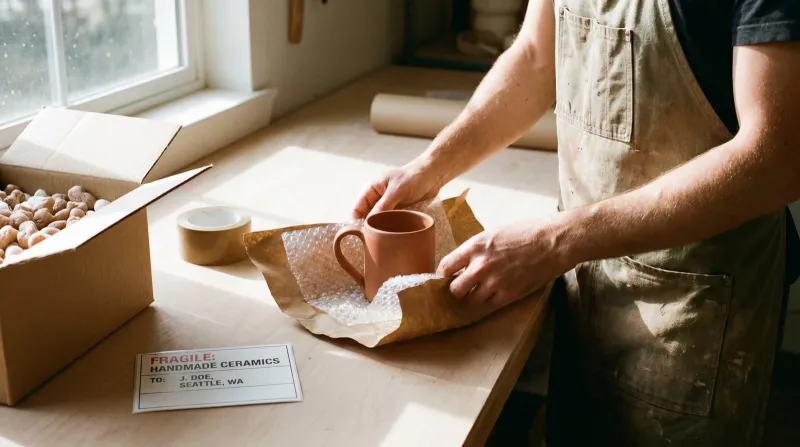
Your Inbox Doesn't Need You: Building a Reply System That Works While You're at the Market

There's a moment every solo seller hits, usually around 9 p.m. on a Sunday, when they realize they've spent more time answering messages than making the products those messages are about. If that's you, the problem isn't dedication. It's that you're running a one-person shop with a one-person inbox, and the inbox scales faster than you do.
The good news: most buyer messages are the same ten questions wearing different hats. That's not a burden — that's an automatable system waiting to happen.
The Math That Should Scare You
Track one week of messages. Most sellers find that 80% of their inbox falls into a handful of buckets: shipping timelines, customization requests, wholesale questions, gift wrapping, and the eternal "is this in stock?" If you're typing fresh answers to the same questions twenty times a week, you're spending maybe three to five hours doing work a template could do in fifteen minutes.
That's a Saturday morning. Every week.
Canned Responses That Don't Read Like a DMV
The reason templates feel cold is that most people write them like legal documents. Don't. Write them the way you'd talk across a market table.
Bad: "Thank you for your inquiry. Please be advised that processing times range from 3-5 business days."
Good: "Hey! I get orders out within three business days — usually faster. If you need it by a certain date, tell me and I'll make it happen."
Same information. One sounds like a corporation, the other sounds like you. A few rules of thumb:
- Use contractions. Always.
- Lead with the answer, then add the warmth.
- Include one specific detail a template wouldn't have — your actual cutoff day, your actual zip code's mail quirks.
- End with a door open: "Anything else I can check on?"
The Ten You'll Answer This Week
Draft these once, save them in your notes app or your marketplace's saved-replies tool, and edit the name before sending:
- "When will this ship?" — Your cutoff day plus your honest handling time.
- "Can I get this by [date]?" — Your answer plus a fallback option (expedited shipping, local pickup).
- "Do you do custom orders?" — Yes/no, plus your lead time and how the process starts.
- "Is this gift-ready?" — What's included, what costs extra.
- "Do you sell wholesale?" — Your minimums and where to find your line sheet, or a polite no.
- "How do I care for this?" — Three sentences max, plus a link if you have a care page.
- "Can you ship to [state]?" — Where you ship, where you don't, and why (perishables, glass, licensing).
- "Is it in stock?" — Current status plus when you restock.
- "Do you have a discount code?" — Your policy, stated once, without apology.
- "I saw you at [market] — is this the same stand?" — A little origin story. This one's worth personalizing every time; it's your best conversion message.
When to Actually Hand Off Messages
If you're at the point of hiring — even a few hours a week of help — customer messages are usually the first thing to delegate, because they're the most systematizable. But delegate in stages:
- First: Someone handles order-status and shipping questions only. Everything else forwards to you.
- Then: Someone drafts replies to everything, you approve and send.
- Finally: Someone answers within a written playbook you build together — the templates above, plus your judgment calls written down.
The playbook matters more than the person. A temp with a great playbook beats a family member guessing.
Say Your Response Time Out Loud
Buyers don't expect instant replies from a person who also makes the product. They expect honesty. Put your response window in your shop announcement, your about page, and your auto-acknowledgment: "I answer messages within 24 hours, Monday through Friday. Orders always come first on market weekends."
A stated window does two things. It cuts the anxious follow-up messages, and it protects you from the 11 p.m. guilt-scroll. Set the expectation once and let it work for you.
The Weekend Test
After you've built your templates, run the experiment: don't open your messages from Friday evening until Sunday night. If your system holds — orders still go out, buyers still feel answered, nothing catches fire — you've bought back the one part of the week that made the whole operation feel like a treadmill.
You started selling regional goods because you like making them. The inbox is supposed to serve that, not the other way around.